
Client information, financial data, and identifying details have been intentionally withheld to protect confidentiality.
Business Challenge
An established specialty food and beverage company based in the Middle Eastern Region approached Russell Strategy Group with an ambitious vision: successfully enter the United States market and ultimately develop a franchise network of approximately 48 locations.
The concept had demonstrated promise in its home market, but the ownership team recognized that success in one country does not automatically translate into another. Before committing significant capital toward U.S. expansion, they sought strategic guidance on validating their business model, selecting an entry market, and assembling the professional resources necessary to support long-term growth.
A preliminary market analysis was commissioned to evaluate the Austin, Texas market, including competitive positioning, demographic trends, target customer concentrations, and potential real estate opportunities. The research examined multiple high-income areas, consumer demographics, competitive bakery and café concepts, and potential locations aligned with the company’s intended customer base.

The Challenge
The client faced several significant strategic decisions simultaneously:
- Determining whether the concept had reached sufficient maturity for international expansion.
- Validating that operating performance in its home market could support U.S. investment.
- Selecting an initial U.S. launch strategy.
- Identifying the right legal, accounting, commercial real estate, and business partners.
- Avoiding expensive location mistakes during the first U.S. opening.
While the client initially intended to move aggressively into the United States, the greatest risk was expanding before sufficient operational proof existed.
Our Approach
Rather than encouraging immediate international expansion, we recommended a phased market-entry strategy designed to reduce risk while preserving long-term growth potential.
Phase One: Validate the Business Model
Our first recommendation was straightforward:
Prove the concept at home before exporting it abroad.
Instead of immediately opening locations in the United States, we advised management to continue expanding within their existing market while documenting operational performance, customer demand, profitability, and unit economics.
Financial reporting was standardized and converted into U.S. dollar equivalents, allowing meaningful analysis of operating performance and providing a framework that American lenders, investors, and professional advisors could easily evaluate.
This disciplined approach created confidence that expansion decisions would be based on measurable performance rather than assumptions.
Phase Two: Evaluate U.S. Market Opportunities
Once the operating results demonstrated that the concept was performing successfully, attention shifted toward identifying the optimal U.S. launch strategy.
A comprehensive market analysis evaluated:
- Demographic characteristics
- Household income
- Population density
- Competitive landscape
- Cultural alignment
- Commercial real estate opportunities
- Long-term expansion potential
Several potential Austin submarkets were analyzed alongside competing specialty bakery and café concepts to better understand customer demand and positioning opportunities.
Phase Three: Strategic Site Selection
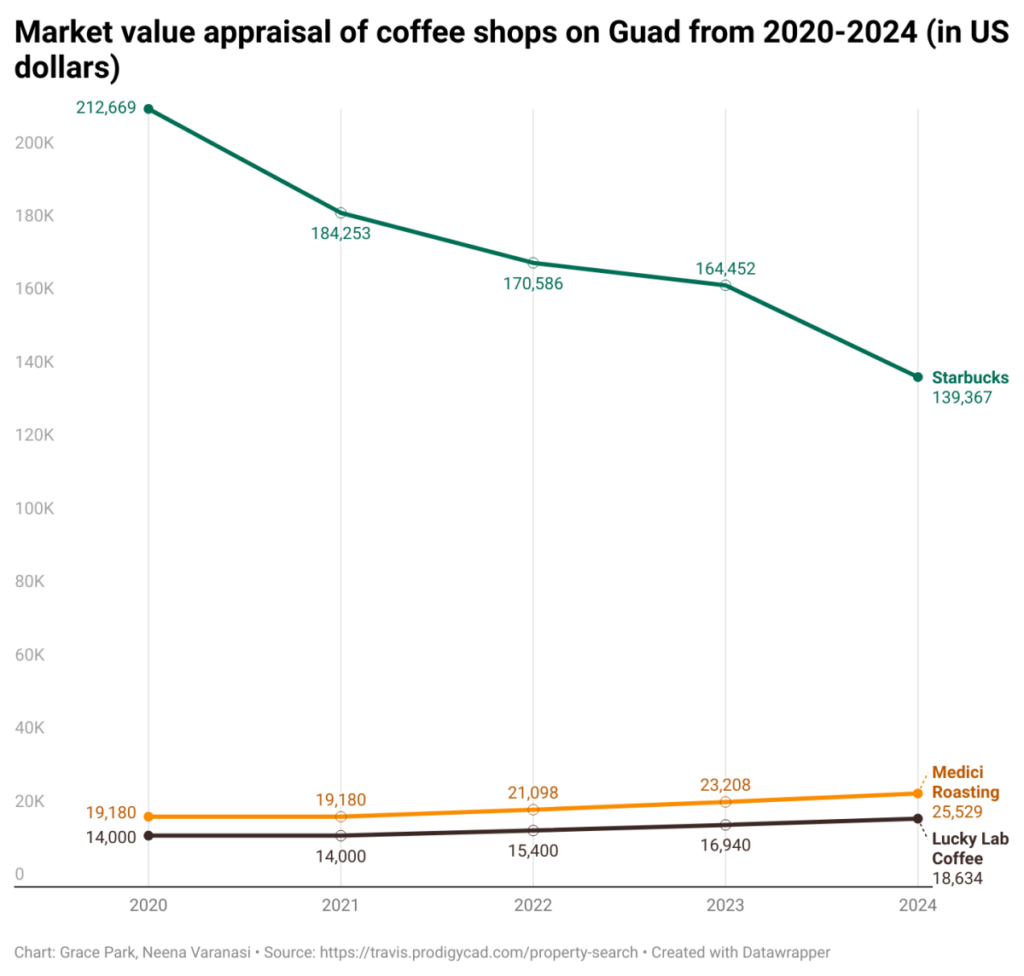
One of the client’s preferred locations was within the University of Texas district along Guadalupe Street.
Although the area appeared attractive because of its high pedestrian traffic, our analysis identified several concerns:
- Exceptionally high commercial lease rates
- Heavy dependence on a student customer base
- Lower discretionary income among primary patrons
- Increased pressure to maintain high transaction volume simply to offset occupancy costs
Rather than pursuing what appeared to be the most visible location, we recommended avoiding this market and focusing on areas where household income, purchasing power, and long-term customer loyalty aligned more closely with the client’s business model.
Sometimes the best strategic decision is not choosing the most popular location—it is choosing the location that creates the strongest economic foundation.
Phase Four: Building the Expansion Team
As expansion planning progressed, introductions were made to experienced professionals capable of supporting international growth, including:
- Commercial real estate specialists
- Business attorneys
- Certified Public Accountants
- Additional vetted strategic partners
The objective was to ensure the client entered the U.S. market with an experienced advisory team rather than attempting to build critical infrastructure after expansion had already begun.
Strategic Recommendation
Rather than immediately launching numerous U.S. locations, we recommended continuing domestic expansion while establishing an initial U.S. presence in a market with stronger demographic alignment.
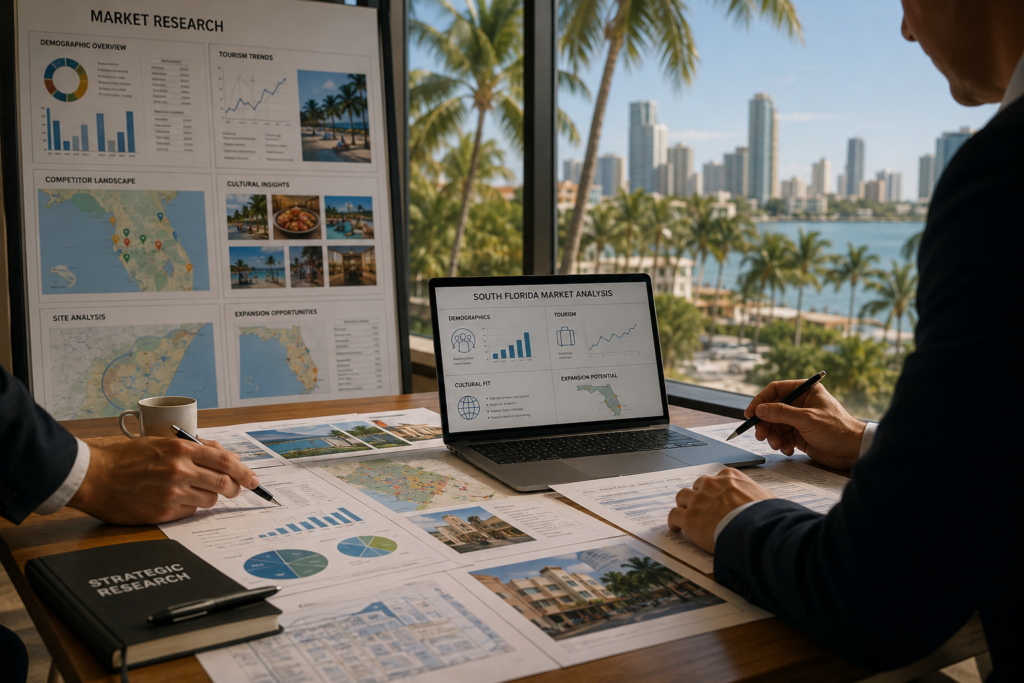
Management ultimately shifted its expansion focus toward South Florida, where several favorable characteristics existed:
- Established target customer demographics
- Significant international tourism
- Strong cultural familiarity with the concept
- A logical entry point for future regional expansion
This represented a considerably lower-risk approach than concentrating initial investment into one high-cost urban market.
An Unexpected Challenge
Following completion of the expansion strategy, geopolitical events dramatically altered the company’s trajectory.
The outbreak of war in the region resulted in both senior leadership and a substantial portion of the company’s workforce being called into military service.
As a result, international expansion plans were temporarily suspended while management focused on far more immediate operational priorities.
Although the strategic roadmap remained intact, execution appropriately shifted behind the realities created by extraordinary external circumstances.
Results
Prior to the suspension of expansion efforts, the engagement achieved several important outcomes:
- Validated the business model before international expansion.
- Established financial reporting suitable for U.S. evaluation.
- Developed a structured U.S. market-entry strategy.
- Identified and avoided a high-risk initial location.
- Connected ownership with experienced legal, accounting, commercial real estate, and business advisors.
- Repositioned the initial U.S. expansion strategy toward a lower-risk entry market.
- Created a scalable framework capable of supporting future franchise development once market conditions permit.
Key Takeaway
International expansion is rarely limited by ambition—it is limited by preparation.
By validating performance before expanding, relying on objective market research instead of intuition, and assembling the right professional team, businesses significantly improve their chances of sustainable long-term success.
In this engagement, the greatest value was not accelerating expansion. It was helping ensure that when expansion occurs, it is built upon a stronger strategic foundation. The market research supporting the U.S. entry strategy included demographic analysis, competitive assessments, location evaluation, and consumer targeting recommendations that informed the client’s decision-making throughout the process.