
One of the most common misconceptions about consulting is that every company is a good fit for advisory services. In reality, some businesses are positioned to benefit tremendously from strategic guidance, while others are not yet ready to implement the changes necessary to achieve meaningful growth.
Before we engage with a company, we look for several characteristics that indicate a genuine commitment to long-term success.
A Long-Term Growth Mindset
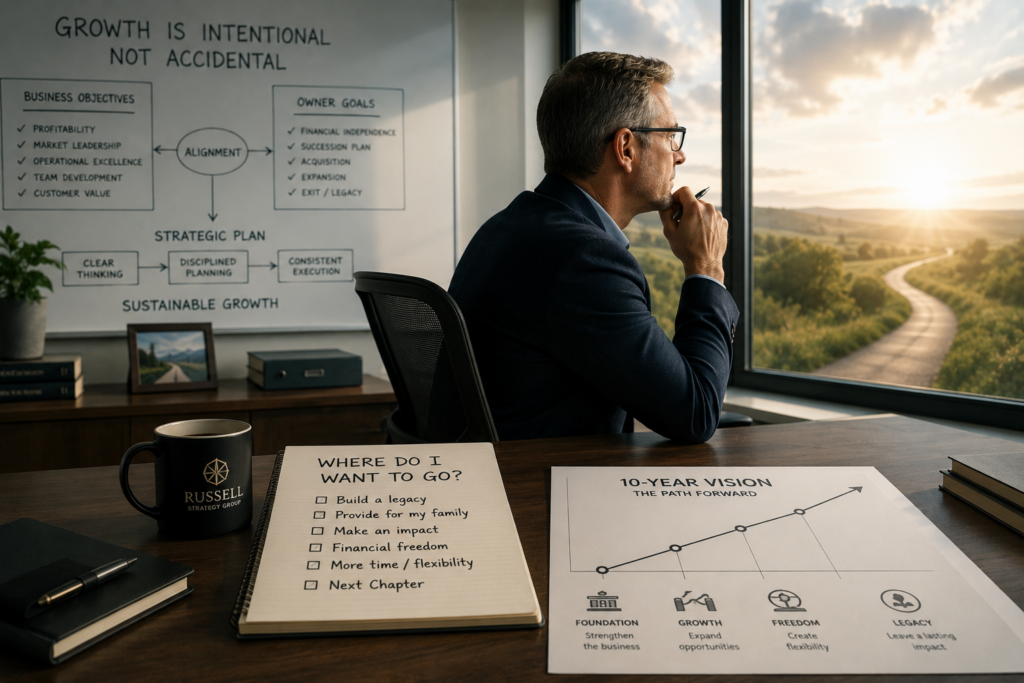
The first requirement is a willingness to think beyond today’s challenges and tomorrow’s opportunities.
Sustainable growth is rarely the result of a single marketing campaign, new hire, or operational adjustment. Rather, it is the outcome of clear thinking, disciplined planning, and consistent execution over time.
This mindset extends beyond the business itself. The strongest growth strategies are often those that align business objectives with the personal goals of ownership. Whether the objective is succession planning, financial independence, acquisition, expansion, or eventual sale, a successful strategy begins by understanding where the business owner ultimately wants to go.
Businesses that grow intentionally tend to outperform those that simply react to circumstances.

The Ability to Invest in Growth
Strategy without implementation is little more than a conversation.
One of the most important considerations is whether a company possesses the financial resources necessary to execute the strategies that are agreed upon. Growth often requires investment in systems, people, marketing, technology, training, or professional expertise.
Organizations operating from a scarcity mindset frequently struggle to make the decisions required to move forward. Every recommendation becomes an expense rather than an investment, and every opportunity is viewed through the lens of immediate cost rather than long-term return.
Businesses that embrace growth understand that strategic investments, when properly planned and executed, are often the catalyst for achieving larger objectives.

Openness to Honest Feedback
No organization is perfect.
Every business, regardless of size or industry, has strengths that can be leveraged and weaknesses that should be addressed. Meaningful improvement requires leaders who are willing to receive candid, professional feedback without becoming defensive.
Our responsibility is not simply to validate existing beliefs. It is to identify opportunities, challenge assumptions, and provide objective observations that can strengthen the organization.
The companies that benefit most from advisory services are typically led by individuals who value truth over comfort and improvement over validation.
A Commitment to Culture
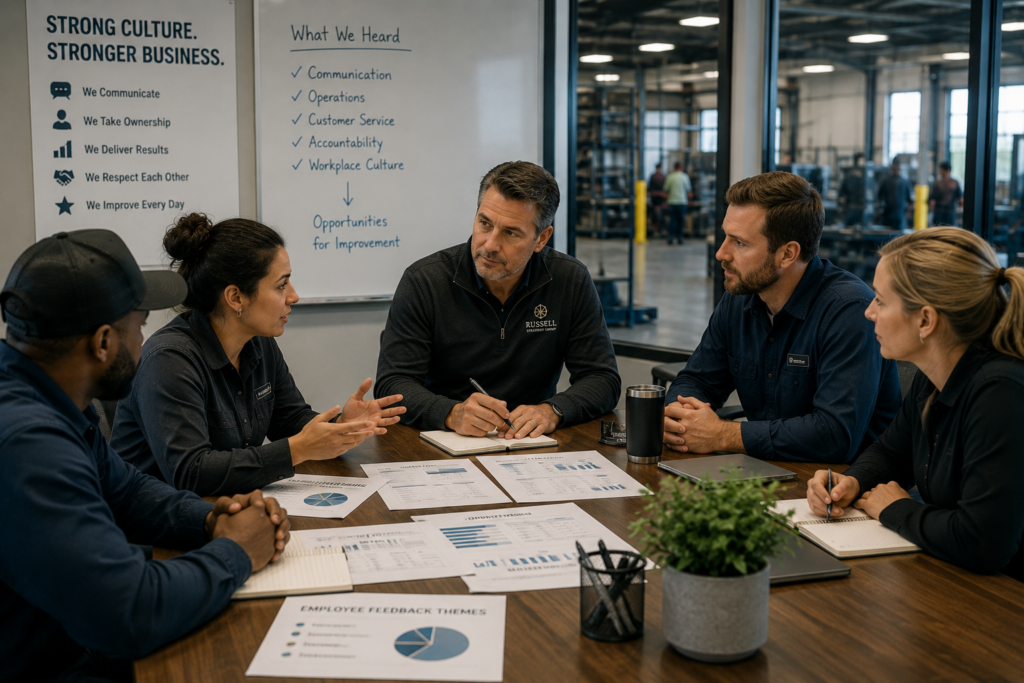
One of the most revealing aspects of any business assessment is the employee audit and interview process.
During these discussions, employees often provide valuable insights regarding communication, operations, customer service, accountability, and overall workplace culture. The purpose of gathering this feedback is not to identify who said what. Rather, it is to understand what is being said and why.
Strong leaders recognize that employee perceptions frequently reveal opportunities for improvement that may otherwise remain hidden.
When reviewing employee feedback, the most successful CEOs, COOs, managing partners, and business owners are less concerned with the source of the comments and more interested in the underlying message.
Healthy organizations understand that culture is not defined by mission statements or marketing materials. It is defined by daily behaviors, leadership practices, and the experiences of both employees and customers.
A sustainable growth strategy requires a business culture that genuinely reflects the brand being presented to the marketplace.
The Bottom Line
At Russell Strategy Group, we believe that successful engagements begin with alignment.
The companies that achieve the greatest results are those that possess a long-term perspective, have the resources to implement change, welcome professional feedback, and are committed to building a culture that supports sustainable growth.
When those elements are present, strategy becomes more than a plan. It becomes a roadmap for creating lasting value for owners, employees, customers, and future generations.